A KOLKATA DEVOTIONAL COUTURE HOUSE ESTABLISHED IN 2017
About Abha Jindal and Label Abha Jindal
Abha Jindal is the Founder and CEO of Label Abha Jindal, a Kolkata-based devotional couture house established in 2017. The label creates Thakurji Poshak, God jewellery, mukut and complete shringar for devotional settings. Each creation begins with the deity, the tradition, the occasion and the proportions of the divine form.

Devotion · Detail · Darshan
Who is Abha Jindal?
Abha Jindal began the venture in 2017 as a personal expression of bhakti. She did not enter deity adornment as an extension of ordinary fashion. She built a specialised practice around the responsibility of preparing attire and jewellery for worship, darshan and seva.
Her practice brings together devotional design, fit, finishing and personal guidance for customers seeking deity adornment.
Abha remains closely involved in the label's design direction and client consultations. She studies the deity's form, measurements, posture, occasion and existing adornments before recommending a poshak, jewellery set, mukut or complete composition. This personal involvement is central to the way the house works.
How did the label grow?
The label now serves clients across India and internationally, including families in North America, the Middle East, Asia and Oceania. Consultations may take place at the Salt Lake boutique, by telephone, through WhatsApp or by video appointment. Photographs and measurements allow the team to guide clients who cannot visit Kolkata in person.
What does Label Abha Jindal create?
The house specialises in Thakurji Poshak, God jewellery, mukut, haar, mala, kundal, kangan, bansuri, divine accessories and complete shringar. Individual pieces are considered in relation to the full darshan, so colour, scale, fall, attachment and proportion work together rather than appearing as unrelated products.
Every request begins with practical information: the deity or divine form, measurements, posture, occasion, preferred colour direction, existing pieces and whether the client needs one element or a complete composition. The final recommendation is made only after those details are understood.
Which textiles does the label use?
Abha works with a range of textiles and techniques selected for each devotional creation: Upara (also called Uppada or Upada), premium silk fabrics, Zamevar (also called Jamawar or Zamawar), Kheer Khap (also called Kimkhab, Kinkhab or Kimkhwab), Petni weaving, genuine Patola and Patola-inspired textiles, and Gharchola.
Material selection is never separated from suitability. Weight, fall, structure, colour, surface work and the proportions of the murti all influence whether a fabric is appropriate for a particular poshak or complete shringar.
What shapes the label’s design approach?
The design conversation starts with the deity form, proportions, occasion and the customer’s devotional preferences. Colour, drape and finishing are discussed for the selected piece; photographs of other settings serve as visual references.
How are fit and finish considered?
Fit and finish depend on the deity form and the selected arrangement. Share a front-facing photograph, measurements, posture and existing adornments so the boutique can discuss:
- The poshak length, spread and fall in relation to the deity’s proportions.
- The position and scale of jewellery, the mukut and other adornments.
- Material suitability, weight, construction and finishing for the intended use.
- Care guidance and any adjustments needed for the selected piece.
Confirm the material details, fit, finishing, current options and price with the boutique before an order proceeds.
Which temple settings appear in the archive?
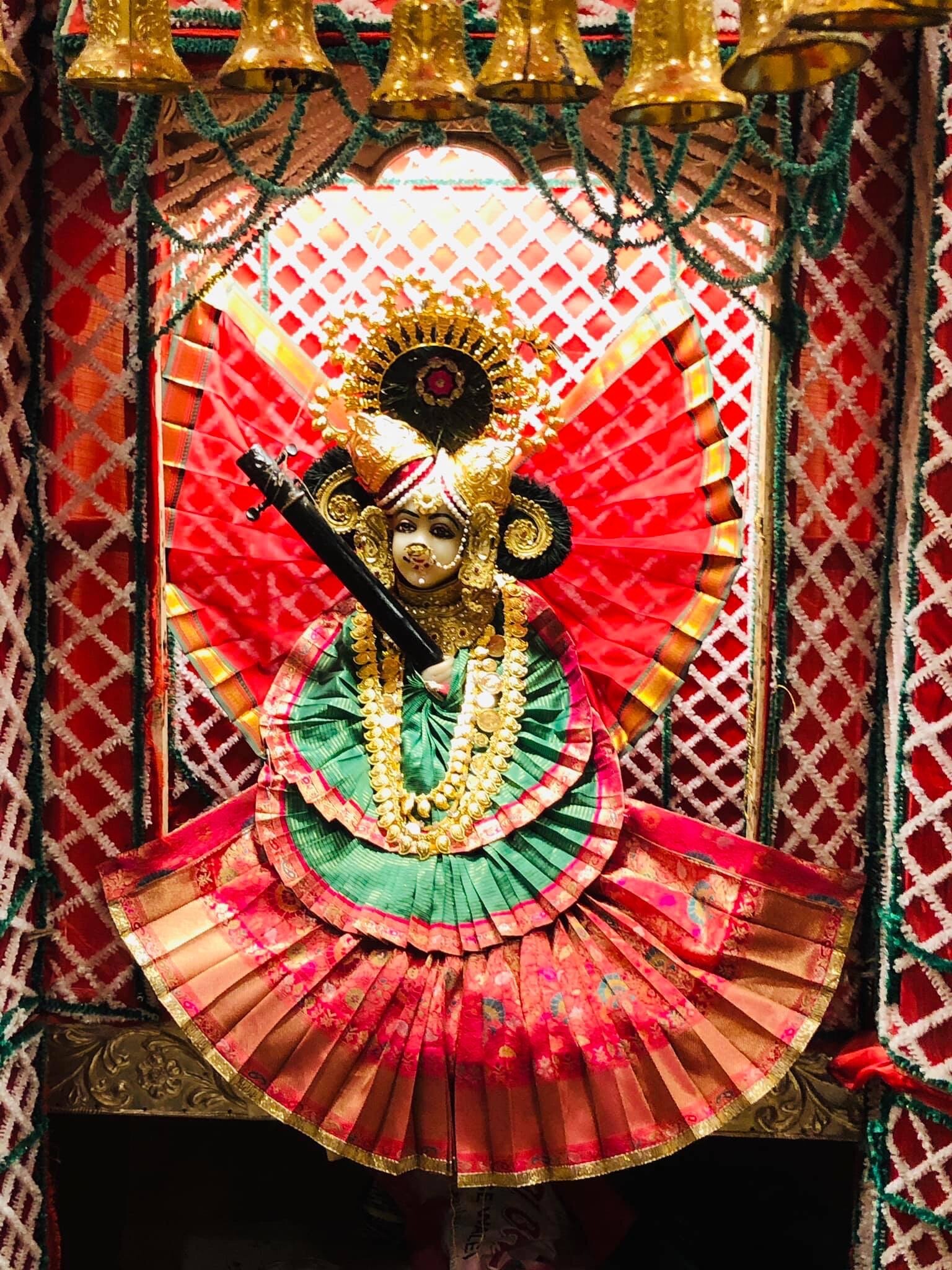
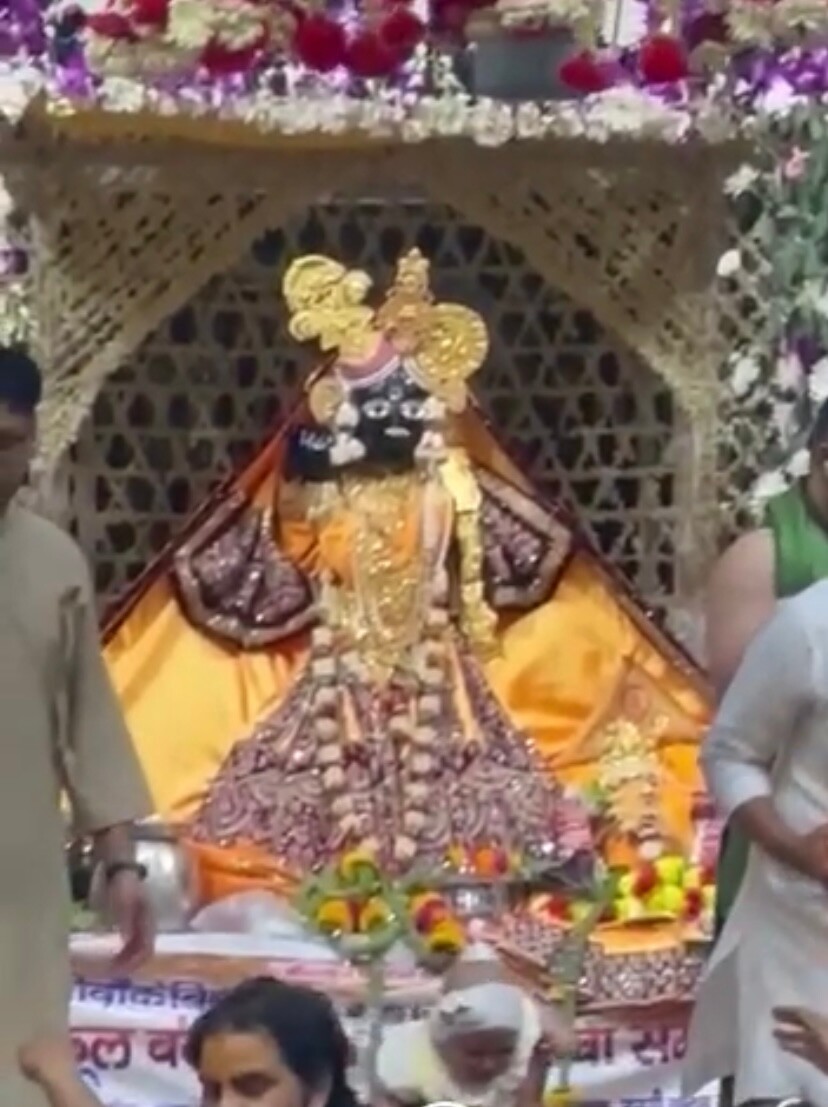
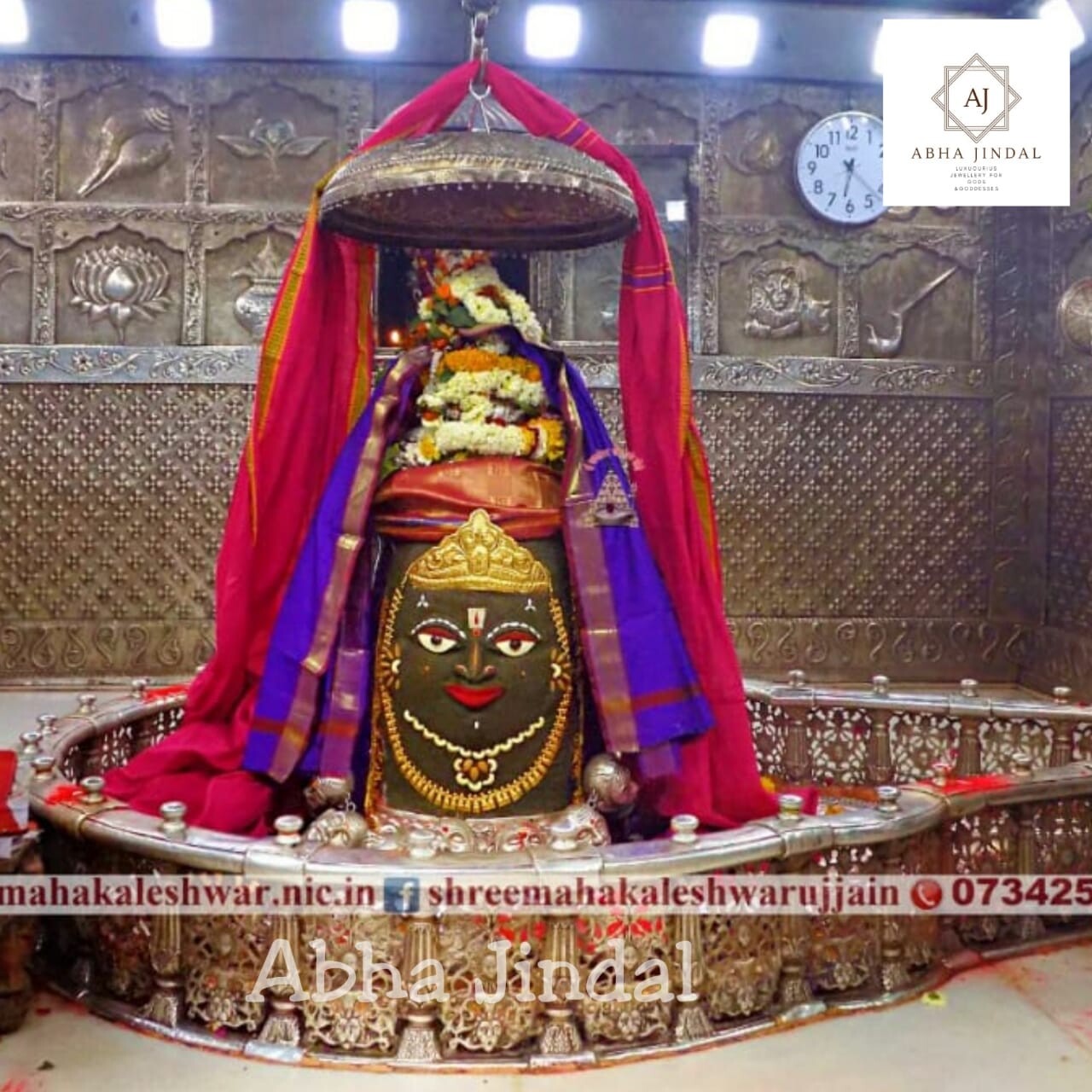
The photographic archive below shows eleven temple settings and devotional presentations. The images do not, by themselves, document a commission or delivery. Please contact the boutique for the provenance of a specific piece.
Deity forms and devotional settings can differ in proportion and practice. Share a photograph and measurements when enquiring; the boutique will discuss materials, fit and appropriate adornments for the selected piece.
How should clients choose the correct poshak size?
Before placing an order, clients should use the guide that matches the deity's form and share the final measurements with the boutique. For Laddu Gopal, measure the idol height from the base to the highest fixed point, excluding detachable accessories, and measure the poshak flat from edge to edge through the centre. For Mata Rani and other standing deities, measure straight from the waistline to the desired hem without following the flare or curved edge of the garment.
Measurements are in inches. Fit may vary with posture, waist placement, jewellery and layering. For non-standard measurements or a standing-deity waist-to-hem length above twelve inches, share clear photographs and the exact measurements for personal guidance.
How can clients arrange a consultation?
Clients may arrange a personal visit to the Salt Lake boutique or begin a consultation by telephone, WhatsApp or video appointment. To receive useful guidance, they should share the deity or divine form, clear photographs, measurements, posture, occasion, preferred colours, existing adornments and whether they require an individual piece or complete shringar.
Current designs, dimensions, material details, customisation possibilities, lead times and availability are confirmed directly before an order proceeds.
Let us help you create the right shringar
Share the deity, occasion and type of creation you have in mind. Label Abha Jindal will guide you through suitable poshak, jewellery, mukut and complete shringar options for daily seva, festivals, temple occasions and special celebrations.
Visits are by appointment in Salt Lake, Kolkata. Video consultations are available across India and internationally.
Documented temple stories
Temple work, shown in its devotional setting.
Open each documentary gallery directly for photographs, captions and location context.